
- Your cart is empty Browse Shop

Key Takeaways
- Natural remedies for a sensitive scalp may ease mild dryness, tightness, or discomfort, but they aren’t automatically suitable for everyone.
- Aloe vera, oat-based ingredients, lightweight botanical oils, and chamomile are commonly used for soothing care, although the right choice depends on how your scalp is reacting.
- Introduce one remedy at a time and avoid harsh DIY ingredients such as lemon juice, baking soda, concentrated vinegar, or undiluted essential oils.
- If a product causes more itching, burning, redness, tenderness, or flaking, stop using it rather than applying it more frequently.
- Persistent scalp sensitivity may have overlapping causes, including dryness, oil imbalance, congestion, or barrier disruption, which can be difficult to distinguish at home.
- At Bio Organicare, a scalp analysis helps us assess your scalp condition more closely so we can recommend care based on what we observe, rather than treating every sensitive or flaky scalp in the same way.
Introduction
Have you been experiencing a stinging sensation on your scalp when applying a new product, or tenderness when you tie up your hair? Or perhaps your usual haircare routine is suddenly causing discomfort even though you have used the same products for months. These are some common signs of scalp sensitivity.
When this happens, some clients ask whether there are natural remedies for a sensitive scalp they can try before turning to stronger treatments.
Our answer: natural ingredients may help soothe dryness, tightness, or mild discomfort, but you need to choose them carefully. A sensitive scalp can still react to essential oils, botanical extracts, and DIY remedies, so the goal is not simply to use something “natural”, but to find an option that suits your scalp condition without adding further irritation.
Commonly Used Natural Remedies for an Irritated Scalp
Here are some common natural remedies for a sensitive scalp that may help calm dryness, tightness, or mild discomfort.
1. Aloe Vera for a Hot or Tight-Feeling Scalp
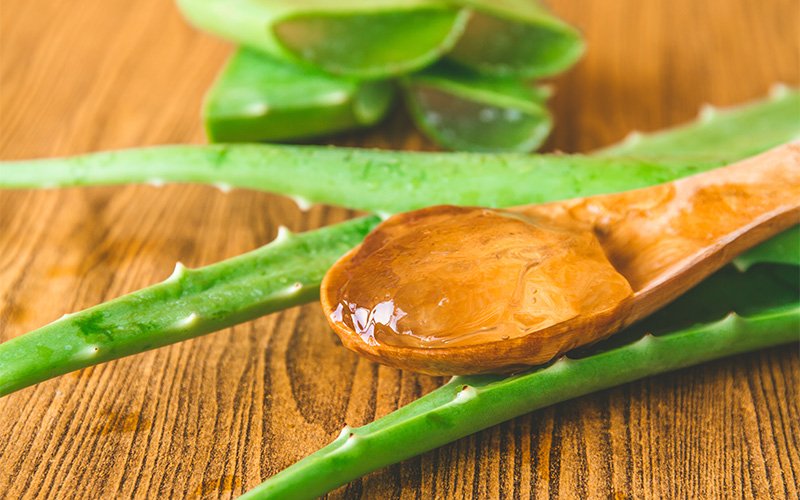
If your scalp feels warm, tight, or mildly uncomfortable, aloe vera may provide a temporary cooling and soothing effect. It is also commonly used to help retain moisture, which can be useful if your scalp tends to feel dry after washing.
We would favour a simple aloe-based formulation rather than applying a heavily fragranced gel or a product packed with multiple active ingredients. The fewer variables you introduce, the easier it is to see whether your scalp actually tolerates it.
2. Oat-Based Ingredients for Dry, Reactive Scalps
Oat-based ingredients, particularly colloidal oatmeal, are often used in products designed for dry and sensitive skin because they can help reduce feelings of dryness and support the skin barrier. This may be worth considering if your scalp tends to feel stripped, itchy, or uncomfortable after shampooing.
3. Lightweight Botanical Oils for Dryness
If dryness is part of the problem, a small amount of botanical oil may help reduce moisture loss and make the scalp feel more comfortable.
However, more is not necessarily better. We sometimes see people respond to tightness by applying a thick layer of oil overnight, only to find that their scalp feels greasy, heavy, or itchy the next day. If your roots already become oily quickly, particularly in Singapore’s humid climate, a lighter formulation and shorter contact time may be a better place to start.
4. Chamomile and Other Gentle Botanical Extracts
Chamomile and similar botanical extracts are commonly included in products formulated for sensitive skin and scalp comfort. They may be useful when you are trying to move towards a simpler, less aggressive routine. However, people with a reactive scalp should opt for a simpler formulation with fewer ingredients.
How to Use Natural Remedies Safely on a Sensitive Scalp
When treating a sensitive scalp at home, a few simple precautions can help you avoid making irritation worse:
- Introduce one new remedy at a time: Changing several products at once makes it difficult to tell what your scalp is reacting to. Give each new product or ingredient time before adding another.
- Avoid harsh DIY ingredients: Lemon juice, baking soda, undiluted essential oils, and highly concentrated vinegar mixtures can be too aggressive for a sensitive scalp, even though they are often described as natural remedies.
- Check the full ingredient list: A product labelled “natural” may still contain fragrance, essential oils, or multiple botanical extracts that your scalp does not tolerate well. Simpler formulations are often easier to assess.
- Patch test when possible: Before applying a new product across your entire scalp, try a small amount on a limited area first and monitor for stinging, redness, or itching.
- Avoid scratching or aggressively massaging the scalp: If your scalp already feels tender or itchy, using your nails or rubbing vigorously can make the discomfort worse. Use your fingertips gently when washing or applying products.
- Stop if symptoms worsen: More frequent use will not make an unsuitable remedy work better. If you notice increased itching, burning, redness, tenderness, or flaking, discontinue it and reassess your routine.
When Home Care and Natural Remedies Are No Longer Enough
If your scalp is still uncomfortable after you have simplified your routine and removed obvious triggers, it may be worth looking into the root cause of your scalp concerns.
For example, some clients come to us with recurring itching and flakes and assume they simply have dandruff. Others experience both oiliness and tightness, which makes it difficult to know whether they should be using clarifying, moisturising, or soothing products. Symptoms can overlap, so treating them based on appearance alone may lead to more trial and error.
At Bio Organicare, our scalp analysis and consultation can give us a clearer view of your scalp before we recommend any treatment. This includes:
- A digital scalp scan using a high-resolution camera to examine the scalp more closely
- A condition assessment to identify whether the scalp appears oily, dry, sensitive, inflamed, or congested
- A follicle evaluation to look at hair density and follicle responsiveness
This helps us move beyond surface symptoms and understand whether your discomfort may be linked to sensitivity, congestion, oil imbalance, or other changes in the scalp environment. From there, we can then make a personalised recommendation based on what we’ve observed.
For a sensitive scalp, treatment will focus on calming scalp reactivity, supporting scalp barrier repair, removing residue without over-cleansing, and improving moisture and scalp comfort.
However, if you are experiencing a dry, tight scalp, the priority may be different. In this case, we may focus more on replenishing moisture, reducing dryness, and supporting the scalp barrier without using overly stripping products. That is why we assess the scalp first, rather than treating all itching, flaking, or discomfort the same way.
Conclusion
A sensitive scalp usually benefits from a simpler, more strategic approach rather than a long list of DIY treatments. If you decide to use natural remedies for your sensitive scalp, introduce them gradually, choose simple formulations, and pay close attention to how your scalp responds.
If stinging, itching, tenderness, or flaking persists despite these changes, it may be time to look beyond home care. At Bio Organicare, we take a holistic, scalp-first approach to scalp and hair treatments, focusing on long-term scalp comfort, balance, and healthier hair growth rather than quick fixes.
If you have any concerns or questions about your hair and scalp, contact us today.
Frequently Asked Questions
Q1: Can a sensitive scalp improve on its own?
Sometimes. If sensitivity is caused by a temporary trigger, such as a new product, frequent colouring, or over-cleansing, symptoms may settle once you remove that trigger. If discomfort keeps returning, however, it may be worth having your scalp assessed to identify other contributing factors.
Q2: How do I know if my scalp is sensitive or just dry?
A dry scalp often feels tight and may produce fine flakes, while a sensitive scalp may also sting, burn, itch, or feel tender when touched. The two can overlap, which is why persistent symptoms are not always easy to distinguish based on appearance alone.
Q3: Should I stop using all scalp products if my scalp becomes sensitive?
Not necessarily. Instead, simplify your routine and temporarily avoid products that seem to trigger discomfort, particularly heavily fragranced or highly active formulas. Continue with gentle cleansing and introduce new products one at a time so you can better track how your scalp responds.