- Your cart is empty Browse Shop
Key Takeaways
The scalp microbiome is the community of bacteria, fungi, and other microorganisms that naturally live on your scalp.
Changes in oiliness, flaking, sensitivity, or recurring buildup may reflect a shift in the wider scalp environment, although these signs can have many causes.
Supporting the microbiome is less about eliminating microorganisms and more about keeping the scalp clean, comfortable, and stable.
Consistent cleansing, limiting buildup, avoiding unnecessary irritation, and introducing products gradually can all support scalp health.
Introduction
Your scalp is home to a natural community of bacteria, fungi, and other microorganisms known as the scalp microbiome. Together, they shape the scalp environment and can influence how balanced, comfortable, or reactive your scalp feels.
When that balance shifts, you may notice changes such as faster oiliness, recurring flakes, itching, or increased sensitivity. Understanding the microbiome can therefore give us a fuller picture of why your scalp may start behaving differently, even when your usual routine has not changed.
What Happens When the Scalp Microbiome Goes Out of Balance?
Here are some of the common changes we look out for when trying to determine whether the scalp environment is out of balance.
1. Your Scalp Becomes Oily Faster
If your roots become greasy much earlier than usual, the first change may simply be that your scalp is producing or retaining more oil and sweat. Hormonal shifts, stress, frequent exercise, product buildup, and Singapore’s humid weather can all contribute.
The important clue is the change from your usual pattern. If your scalp suddenly needs washing more often or feels greasy soon after cleansing, we would look at what may be increasing oil or preventing the scalp from staying clean between washes.
2. Flaking Keeps Returning
A flaky scalp points to a different issue. In dandruff-prone scalps, Malassezia is a type of yeast that naturally lives on the scalp, but it can break down sebum into by-products that irritate the skin in susceptible individuals. This may speed up skin-cell turnover and lead to visible flaking.
If the flakes keep returning despite regular cleansing, or come with redness, soreness, severe itching, or thick scaling, we recommend seeking medical advice to rule out conditions such as seborrhoeic dermatitis, eczema, or psoriasis.
3. Your Scalp Feels More Sensitive
Tightness, stinging, itching, or tenderness can indicate that the scalp barrier has become irritated. When this happens, products or habits that were previously well tolerated may suddenly feel uncomfortable.
Common triggers include hair colouring, frequent exfoliation, high heat, harsh cleansing, or introducing several new products at once. Rather than immediately blaming one product, we look at what may have recently increased irritation or weakened the scalp’s tolerance.
4. Buildup Returns Quickly
Dry shampoo, styling products, leave-ins, sweat, and excess sebum can accumulate around the roots and make the scalp feel greasy, heavy, or itchy soon after washing.
Stronger clarifying shampoos or more frequent scrubbing may remove buildup temporarily, but they can also irritate the scalp if used too often. This can create a cycle where the scalp alternates between congestion and over-cleansing, making the underlying scalp imbalance harder to manage.
Our Tips on Maintaining Scalp Health and Supporting the Microbiome
At Bio Organicare, we recommend focusing on everyday habits that help keep the scalp environment stable rather than trying to “reset” it with stronger products. Here are some practical steps we recommend.
1. Wash Your Hair and Scalp Daily
There is no benefit in deliberately leaving your scalp oily or sweaty just to extend the time between washes. Because of Singapore’s hot, humid weather, we usually recommend washing your hair and scalp daily, especially if you sweat a lot or exercise often.
2. Introduce New Products One at a Time
Changing several products at once makes it difficult to understand what your scalp is responding to. If you want to change your shampoo or introduce a scalp serum or exfoliant, add one product first and observe how your scalp responds before making another change. This is particularly useful for sensitive or reactive scalps.
3. Avoid Over-Exfoliating
Exfoliation can help loosen dead skin cells and product residue, but doing it too often can leave the scalp irritated and more reactive. Scrubbing with your nails, using coarse scrubs, or combining several exfoliating products may cause redness, stinging, or tightness.
We generally recommend using a gentle exfoliating method only when needed, following the product instructions, and stopping if your scalp becomes sore or uncomfortable.
4. Look at the Overall Pattern
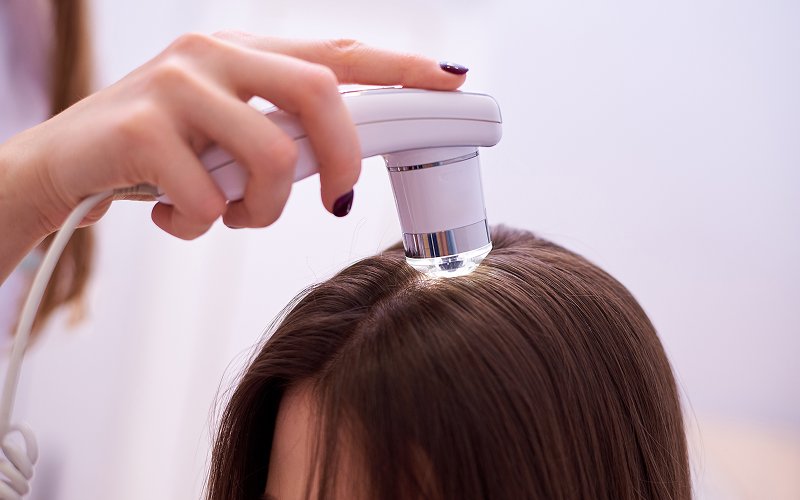
If your scalp repeatedly shifts between oily, dry, flaky, or sensitive, we recommend looking beyond the individual symptom.
At Bio Organicare, we will conduct a scalp analysis to assess visible factors such as oiliness, dryness, sensitivity, congestion, follicle condition, and hair density patterns. It does not directly test the microbiome, but it helps us identify which parts of the scalp environment may be contributing to recurring discomfort or instability.
From there, we take a scalp-first approach rather than recommending the same treatment for everyone. For example, someone with a dry scalp may benefit from treatments that support scalp hydration, improve resilience, and gently cleanse without stripping your scalp of its natural oils. On the other hand, a client with an oily scalp and heavy buildup may need more intensive cleansing to remove trapped residue and maintain a stable scalp environment for hair follicles.
Conclusion
A healthy scalp microbiome is less about achieving a “perfect” balance and more about keeping your scalp stable over time. If you notice that oiliness, flaking, sensitivity, or buildup keeps returning, pay attention to the pattern rather than treating each episode as a separate problem.
At Bio Organicare, we approach this through a combination of professional scalp analysis, customised in-centre care, technology-supported scalp activation, and bio-organic formulations made without sulfates, parabens, PEG, alcohol, or GMOs. Rather than relying on a single product or quick cosmetic fix, we build care around how your scalp is actually behaving and adjust the approach as it changes.
Book an appointment with Bio Organicare for a personalised scalp analysis and consultation today.
Frequently Asked Questions
1. Can you test your scalp microbiome?
Specialised laboratory testing can analyse microorganisms on the scalp, but this is different from a standard scalp analysis. At Bio Organicare, we assess visible scalp conditions rather than directly sequencing the microorganisms present.
2. Does an imbalanced scalp microbiome cause dandruff?
Not by itself. Dandruff appears to involve several interacting factors, including microorganisms such as Malassezia, sebum, inflammation, and changes in the skin barrier.
3. Can stress affect your scalp microbiome?
Potentially. Stress can influence oil production, sweating, inflammation, and skin barrier function, all of which can change the scalp environment. If your scalp becomes noticeably oilier, itchier, or more sensitive during stressful periods, it may be worth looking at both your routine and the wider triggers.