
Grey Hair Treatment: A Scalp-First Approach to Greying
Grey hair treatment at Bio Organicare focuses on the scalp conditions that may affect pigment activity in new hair growth. Reverse greying refers to gradual changes where darker roots may appear from the follicle while existing grey strands remain unchanged. It is not cosmetic colouring, does not darken hair that has already grown out, and cannot be guaranteed. For those considering white hair treatment, scalp analysis helps clarify what may be possible before care begins.
What is Reverse Grey Hair?
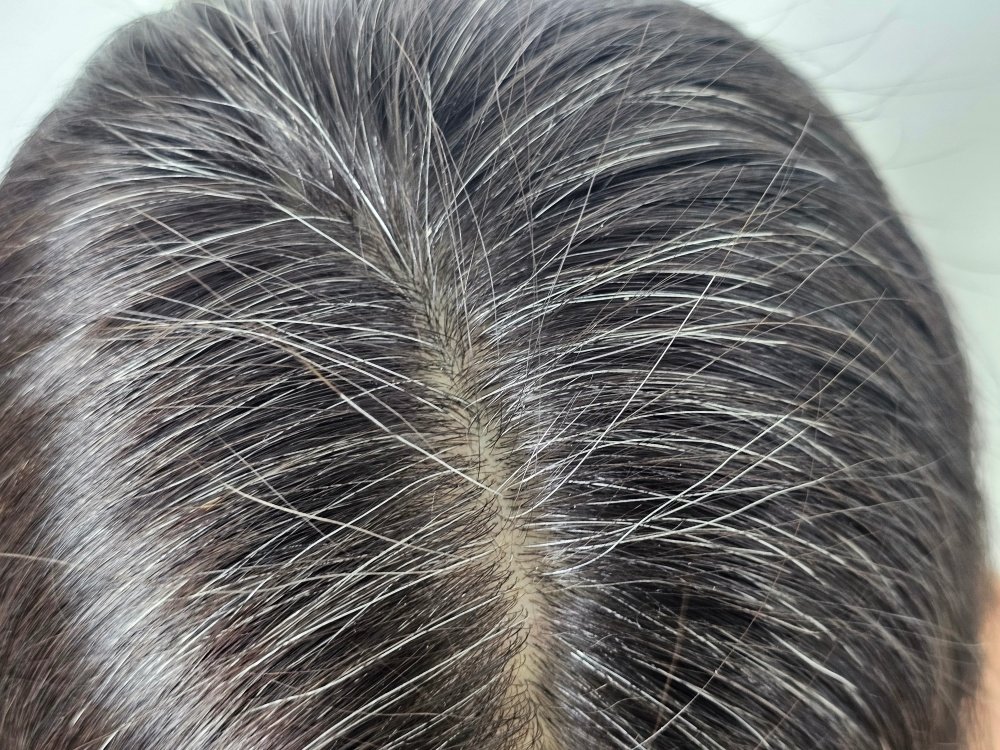
Reverse grey hair refers to observed changes in pigmentation in new hair growth in some individuals, where darker roots may appear while existing hair remains grey.
This is not an instant transformation, does not affect existing grey hair, and is not a guaranteed or permanent outcome.
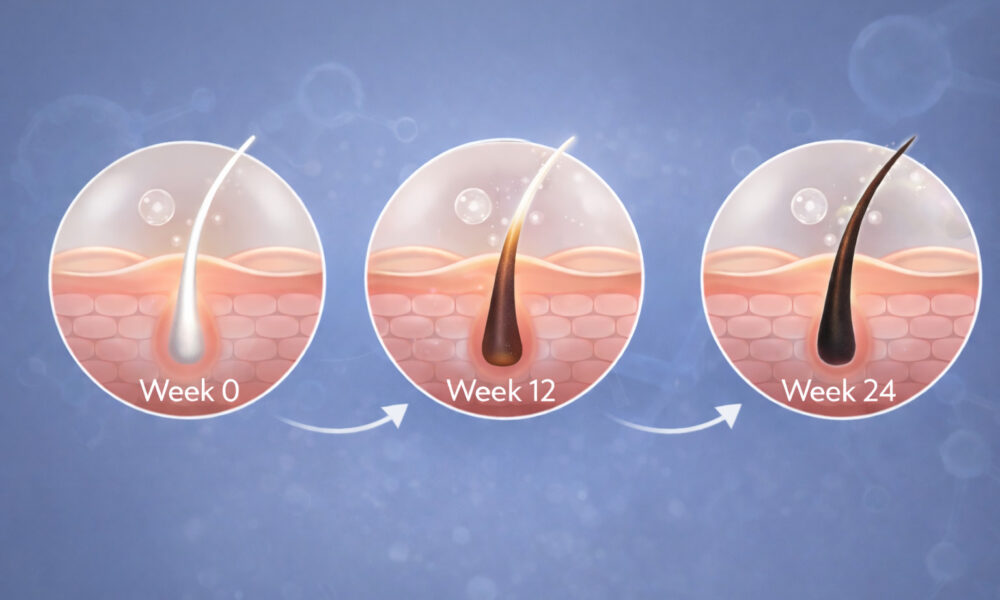
When observed, changes occur gradually and vary between individuals depending on scalp condition, age, and follicle responsiveness.
It is often identified during close scalp examination, where:
- A single strand shows two colours
- Grey hair appears lighter toward the ends
- New growth near the scalp appears darker
This reflects changes in hair pigmentation activity, not cosmetic colouring.
Why Does Hair Turn Grey and Why Can It Sometimes Change?
Hair greys for reasons that build up over years, and many of them begin around the follicle and its pigment cells. Age, scalp circulation, inflammation, oxidative stress, and daily lifestyle strain can all affect the scalp environment. Understanding these drivers helps explain why scalp condition matters when discussing grey hair treatment.

Age-related follicle changes

Reduced scalp circulation

Long-term scalp fatigue or inflammation

Oxidative stress

Lifestyle or nutritional stressors
In some individuals, when scalp condition and follicle responsiveness improve, pigment activity may partially resume in new hair growth.
Reverse Greying vs Hair Colouring: What Is the Difference?
Some confusion around grey hair treatment comes from placing reverse greying and hair colouring in the same category. They work in different ways, so the expected results are different too.
Both can play different roles. Many people use gentle colouring for immediate coverage while following a scalp care programme to support follicle health over time. For those who want coverage without harsh chemicals, our organic hair colour for sensitive scalp can be considered alongside scalp care.
| Point | Reverse Greying (Scalp-First Care) | Hair Colouring |
|---|---|---|
| What it is | Biological pigment activity in the follicle | Cosmetic colour applied to the hair shaft |
| Where it works | Inside the scalp and follicle | On the outside of existing strands |
| Speed | Gradual, over months, if it appears | Immediate visible coverage |
| Affects existing grey hair | No, only new growth | Yes, covers all strands |
| Guaranteed | No, varies by individual | Colour coverage is visually predictable |
| Upkeep | Ongoing scalp support | Regular re-colouring as roots appear |
Common Misunderstandings About Reverse Grey Hair
A few common beliefs about white hair treatment and reverse greying are worth correcting clearly.
1. “Grey hair can turn black overnight.”
Any pigment change appears only in new growth, never in strands that are already grey. Where change is observed, it is slow and limited to fresh hair growing from the follicle.
2. “Reverse greying works for everyone.”
Response varies from person to person. Age, scalp condition, and how far greying has progressed all affect whether any change appears. No outcome can be promised.
3. “This is the same as colouring.”
Reverse greying refers to pigment activity inside the follicle. Colouring applies dye to the hair shaft. They address the same concern through different processes.
4. “If it is going to work, I will see it quickly.”
Changes, where they appear, usually develop across months. Progress is gradual and depends on consistent scalp care over time.
Why Scalp Condition Matters for Pigmentation
Hair pigment production depends on:

Follicle health and responsiveness

Scalp circulation and oxygen delivery

Reduced oxidative stress in the scalp environment
Supporting scalp condition helps to:
Improve follicle responsiveness

Support healthier hair growth cycles

Create conditions where pigment activity may resume
How Bio Organicare Approaches Reverse Grey Hair
At Bio Organicare, grey hair treatment is approached under our Scalp Activation and Regeneration pillar, which includes PlasmaCell-X technology.
The focus is on the scalp environment, where follicles and pigment activity are supported through condition-led care. This may help create a scalp setting that is more favourable for follicle function, although pigmentation changes remain individual and cannot be guaranteed.
Our approach focuses on:
Every programme begins with a professional scalp analysis. Recommendations are based on your actual scalp condition instead of a fixed template, so you can understand what your scalp needs before deciding on care.
For how this same scalp-first thinking applies to growth concerns, see our hair growth treatment page.
What Results May Look Like
Where changes appear, they usually develop slowly across months of consistent scalp care. They may look like:
Timelines differ from person to person. Changes are gradual and are often easier to notice during close scalp checks than from a distance.
Results cannot be guaranteed. Scalp care mainly supports follicle health and scalp condition, while any pigment change remains a possible but unpredictable outcome.
If immediate coverage matters while you continue scalp care, gentle organic hair colour options for sensitive scalps can be considered alongside a scalp care programme.
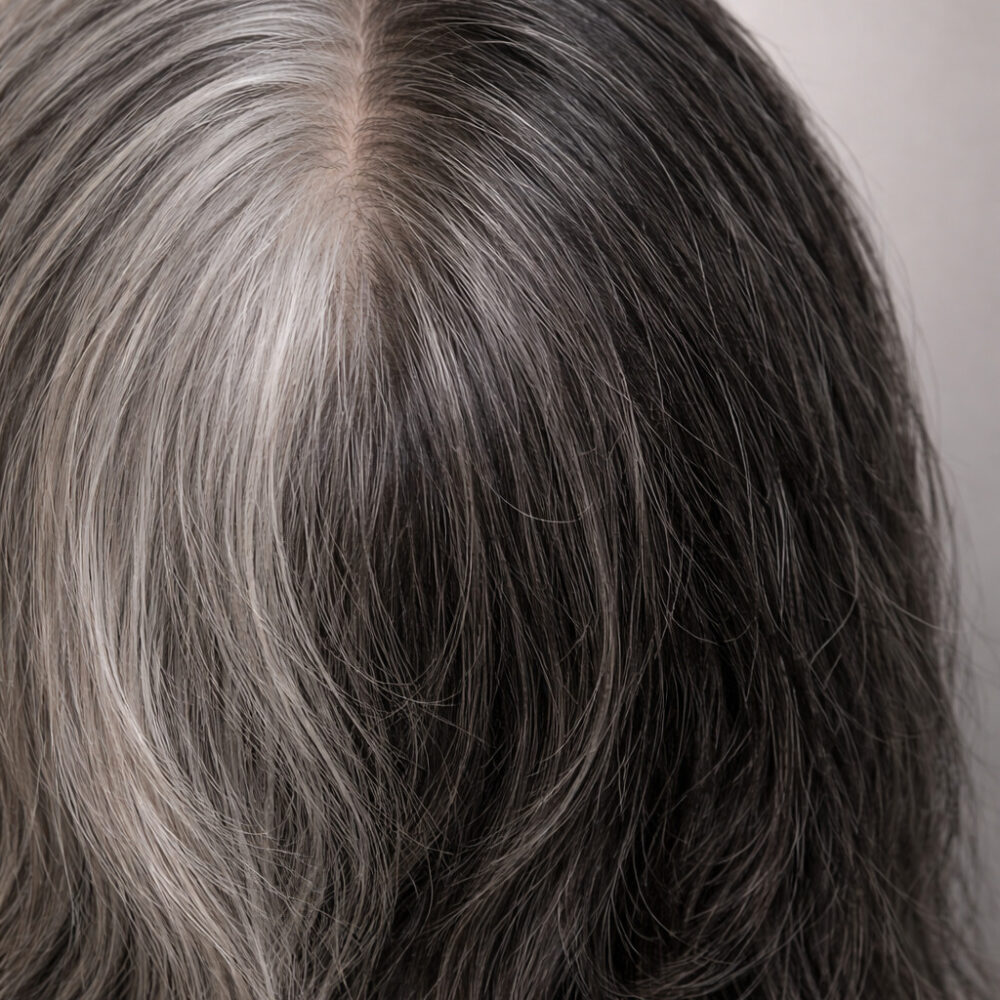
Who Might Consider Grey Hair Treatment?
Scalp-first grey hair treatment may suit certain situations more than others. It may be worth considering if you:
It may be less suitable when greying is already widespread across the scalp, especially if follicle pigment activity has long reduced. A scalp analysis gives a clearer view before any care begins.
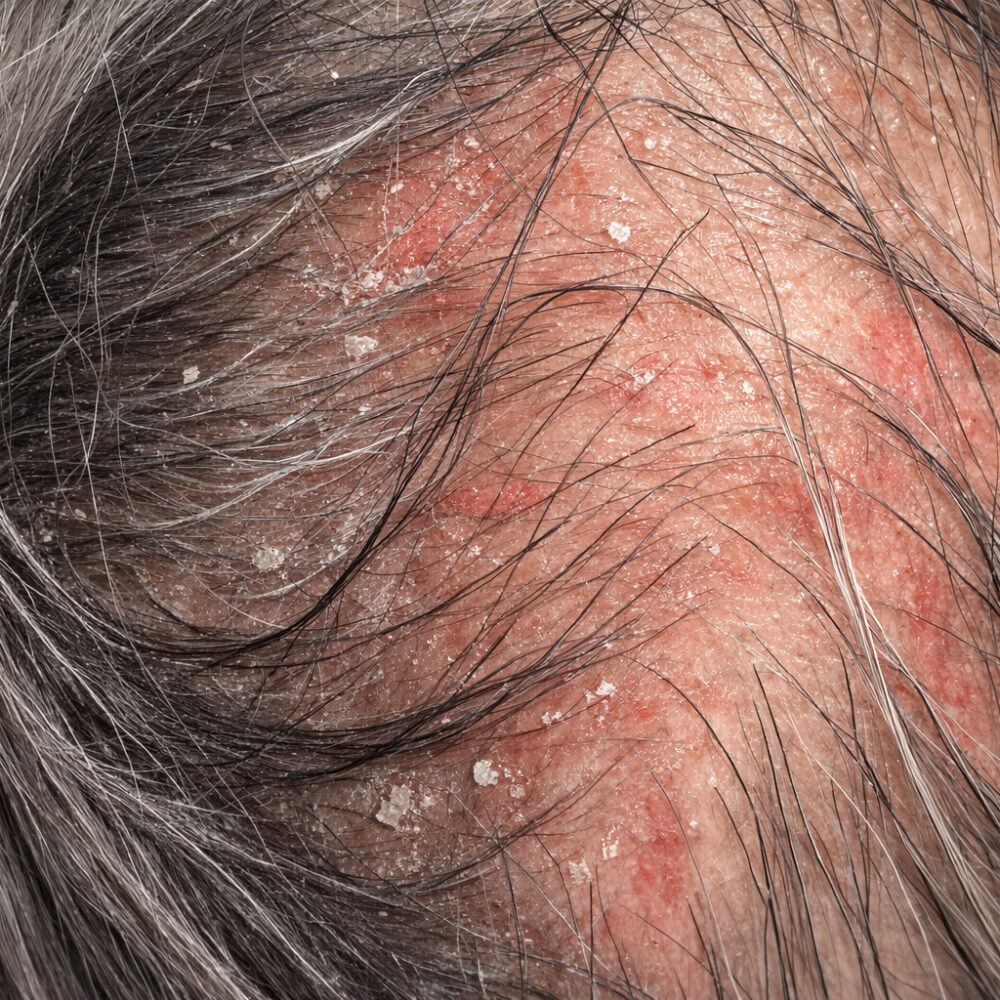
Related Scalp & Hair Concerns
Reverse grey hair rarely appears in isolation. It often sits alongside other scalp and hair concerns that may need to be addressed as part of the same care plan.
Addressing the scalp as a whole helps support long-term pigment health and overall follicle condition.
FAQ
01. Can all grey hair be reversed?
02. How long does it take to see changes?
03. Does reverse greying replace hair colouring?
04. Is reverse greying permanent?

Start Your Scalp-First Journey
Begin with a professional scalp analysis, the foundation of every care journey at Bio Organicare.
*Educational Notice: This page provides educational information about reverse grey hair.
It does not replace professional assessment or guarantee specific outcomes.
Individual responses vary.