
- Your cart is empty Browse Shop
Key Takeaways
- Oily roots and dry hair ends can occur together because the scalp produces oil differently from the way the hair lengths retain moisture.
- Heat, humidity, sweat, hormonal changes and product buildup can all make the scalp feel greasy more quickly.
- Focus shampoo on the scalp and roots, while applying conditioner, masks and leave-in products only through the mid-lengths and ends.
- Daily washing with a gentle shampoo may suit many people in Singapore, but your routine should still be adjusted based on how your scalp and hair respond.
- If oiliness comes with flakes, itchiness, discomfort or a coated feeling that does not improve with home care, a scalp treatment can help identify the underlying concern.
Introduction
It can be frustrating to deal with an oily scalp and dry hair at the same time. You may wash your hair in the morning only to notice flat, greasy-looking roots by the next day, while the ends still feel rough, tangled or difficult to style.
The good news is that this combination is common, particularly in Singapore’s humid weather, and it does not mean you need to choose between a clean scalp and softer hair. The key is to treat your scalp and hair lengths as separate areas with different needs.
Why Your Scalp Gets Oily While Your Hair Ends Feel Dry
An oily scalp may be due to several factors, such as:
- Genetics: Some people naturally produce more sebum than others.
- Hormonal changes: Puberty, menstruation, pregnancy or other hormonal shifts can affect oil production.
- Heat and humidity: Singapore’s weather can cause more sweat and oil to collect at the roots.
- Stress: Ongoing stress may affect your scalp’s oil balance.
- Frequent exercise: Sweat can mix with sebum and make the roots look greasy sooner.
- Product buildup: Dry shampoo, styling products or conditioner near the roots can leave the scalp feeling heavy or oily.
However, oil or grease on the scalp might not travel down your hair, especially if your hair is long, coloured, heat-styled, wavy or prone to dryness. Moreover, hair ends are older and more exposed to heat or chemical processing, making them more prone to dryness and tangling.
How to Build a Balanced Hair Care Routine
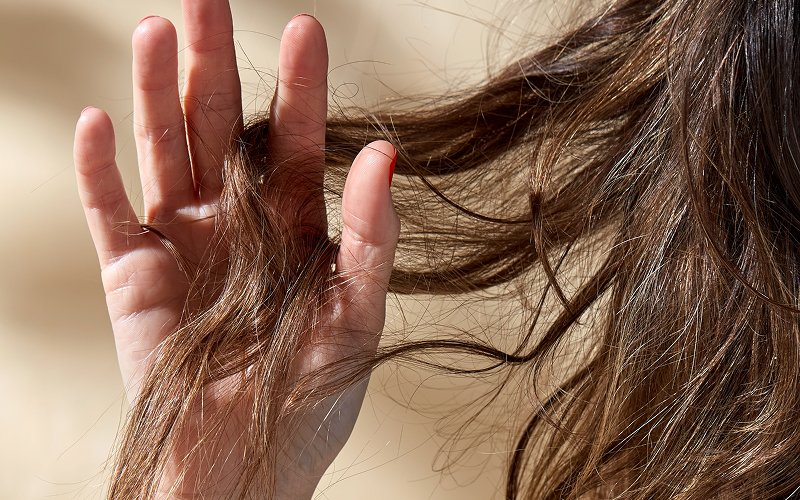
To effectively manage an oily scalp and dry hair ends, the key is to build a routine that controls oil production on the scalp without stripping the hair lengths of moisture.
Tip #1: Shampoo the Scalp, Not the Whole Length of Your Hair
Apply shampoo mainly to your scalp and roots, then massage gently with your fingertips for about a minute before rinsing thoroughly. This helps remove oil, sweat and product residue without repeatedly stripping your hair lengths of moisture.
Avoid using your nails, as scratching can irritate the scalp. When rinsing, let the shampoo run through the rest of your hair rather than working more product into the ends.
Tip #2: Set a Washing Schedule Based on Your Scalp
There is a lot of information online about whether you should wash your hair daily or less often, but there is no single “correct” washing frequency. The right schedule depends on how quickly your scalp becomes oily, your hair texture, whether your hair is coloured, bleached or chemically treated, and how your mid-lengths and ends respond after washing.
For example, finer hair or a scalp that becomes greasy quickly may need more frequent washing, while textured, dry or chemically processed hair may benefit from a gentler schedule to avoid drying out the lengths. Pay attention to the overall result: your scalp should feel clean and comfortable, while your ends should not become stiff, rough or difficult to detangle.
3. Keep Conditioner and Treatments Away From the Roots
When applying conditioner, do so from the mid-lengths to the ends and focus on the driest areas. If your ends are particularly rough or prone to tangling, leave the conditioner on for the recommended time before rinsing.
For extra support, use a lightweight mask once or twice a week as a targeted treatment for dry hair ends. Apply only enough to coat the hair lightly, as using too much can leave the lengths feeling coated rather than soft.
4. Use Styling Products More Selectively
Try to keep dry shampoo, oils, serums and styling creams away from the scalp unless the product is specifically designed for scalp use. These products can be helpful, but using too much or layering them repeatedly may make your roots feel heavy and greasy sooner.
Use a small amount first, especially on finer hair, and apply oils or serums only to the ends where possible.
5. Reset Your Routine When Your Scalp Feels Coated
If your scalp feels sticky, congested or heavy even after washing, product buildup may be contributing to the problem. Consider using a sulphate-free natural scalp cleansing shampoo formulated for sensitive, oily, or imbalance-prone scalps.
For recurring oiliness, mild flaking or a scalp that feels coated despite regular washing, Bio Organicare’s Scalp Maintenance & Repair treatments may be a helpful next step. The process starts with a scalp analysis and consultation to better understand concerns such as buildup, sensitivity and scalp comfort, before recommending a suitable care approach.
This may be useful when you are dealing with oily roots alongside dryness or sensitivity. However, if you have painful inflammation, severe itchiness, bleeding, spreading redness or symptoms that are getting worse, it is best to seek medical advice from a doctor or dermatologist first.
Common Mistakes to Avoid
A few less obvious habits can also make oily roots and dry ends harder to manage.
Washing With Very Hot Water
Using very hot water can leave both your scalp and hair lengths feeling drier than usual. This may make the ends feel rougher after washing, while your scalp may feel uncomfortable or produce more oil over time. Use lukewarm water where possible, especially when shampooing.
Skipping Leave-In Products for Dry Ends
If your ends feel dry between washes, conditioner alone may not always be enough. A lightweight leave-in conditioner or serum applied only to the mid-lengths and ends can help reduce tangling and improve softness without weighing down the roots.
Over-brushing Your Hair
Brushing too often, especially when your hair is dry or tangled, can create friction and make the ends more prone to breakage. Use a wide-tooth comb or a gentle brush, start from the ends and work upwards slowly to minimise pulling.
Conclusion
Managing oily roots and dry hair ends at the same time may not be as difficult as you may think. By focusing on gentle cleansing at the scalp, giving the lengths more targeted moisture and avoiding habits that add unnecessary buildup or friction, you can make the imbalance easier to manage over time.
If your scalp still feels oily, flaky or uncomfortable despite adjusting your routine, Bio Organicare can help. With our comprehensive scalp analysis and targeted treatments, we can identify whether excess oil, product buildup or sensitivity may be contributing to the issue. From there, we can recommend a treatment plan that supports a cleaner, more comfortable scalp without drying out or damaging your hair.
For more information on what we do, book an initial consultation with us today.
Frequently Asked Questions
Q1: Can I use a hair oil if my scalp gets greasy easily?
Yes, but keep it away from your scalp. Apply one or two drops of a lightweight hair oil only to the mid-lengths and ends, ideally when they are slightly damp. This can help reduce dryness and frizz without making your roots look oilier.
Q2: Does trimming my hair help with dry ends?
A trim will not change how much oil your scalp produces, but it can help remove split, frayed ends that are harder to smooth or detangle. If your ends still feel dry despite conditioning and leave-in care, a regular trim may make your hair look healthier and easier to manage.
Q3: Are there any foods I can eat to support a healthier scalp and hair?
A balanced diet will not directly stop an oily scalp or repair dry ends, but getting enough protein, iron, omega-3 fats and vitamins can support overall hair health. Include foods such as eggs, fish, leafy greens, beans, nuts and seeds as part of your regular meals. Staying hydrated may also help if your hair feels dry, although it will not replace proper conditioning and scalp care.