
- Your cart is empty Browse Shop
Key Takeaways
- An oily scalp is not always a problem on its own, as your scalp naturally produces oil to protect itself.
- An effective hair care routine for an oily scalp should focus on managing buildup without stripping the scalp.
- Washing frequency should depend on how quickly your scalp gets oily, especially in Singapore’s humid climate.
- Using the right shampooing technique, weekly scalp exfoliation, and proper cleansing can help reduce greasiness.
- If oiliness keeps returning, a professional scalp analysis can help identify the likely cause and guide a more suitable approach.
Introduction
If your hair looks flat, greasy or heavy shortly after washing, you may feel like your scalp is working against you. However, oil itself is not the enemy. Your scalp’s natural sebum production helps protect its surface and maintain a healthy environment. The issue usually begins when oil, sweat, and residue build up faster than your routine can keep up with.
Instead of constantly switching shampoos or washing more aggressively, a better approach is to build a targeted hair care routine for your oily scalp.
How to Build an Effective Hair Care Routine for an Oily Scalp
1. Adjust Your Washing Frequency
There is no single “correct” washing frequency for everyone. Some people may need to wash their hair daily, especially in Singapore’s heat and humidity, while others may be more comfortable washing every other day. It is more useful to observe your scalp’s response and adjust your washing frequency accordingly, rather than following strict rules or trends.
A useful way to decide is to look at how quickly your scalp feels oily, itchy, sweaty or heavy after washing. If your roots become greasy by the end of the day, a gentle daily wash may be more suitable than forcing yourself to stretch out wash days. If your scalp still feels fresh the next day, you may be able to wash less often.
2. Shampoo Twice and Focus on the Roots
If your hair still feels greasy after washing, using more shampoo in a single wash may not be the answer. A gentle double cleanse can be more effective. The first shampoo helps loosen oil, sweat, and product residue, while the second leaves the scalp with a cleaner finish. You may also want to use a natural scalp cleansing shampoo that does not irritate your scalp.
Focus your shampoo on the roots, especially around the crown, hairline and nape, where oil often collects. Massage with your fingertips instead of scratching with your nails, as harsh scrubbing can irritate the scalp.
3. Exfoliate the Scalp Once a Week
Scalp exfoliation can help remove dead skin cells, excess oil and residue that regular shampooing may not fully clear. This can be especially helpful if your scalp feels congested, flaky or oily soon after washing.
However, exfoliation should be done gently and not too often; once a week is usually enough for most people. Avoid aggressive scrubs if your scalp feels sore, sensitive, or inflamed. This helps you cleanse more thoroughly without being too harsh on your scalp.
4. Rinse All Products Thoroughly
Product residue is one of the easiest things to overlook. Shampoo, conditioner, masks and styling products can cling to the scalp or roots if they are not rinsed out properly. Over time, this can make your hair feel greasy more quickly, even if your scalp’s sebum production has not changed.
Spend extra time rinsing around the crown, behind the ears and near the nape. Keep conditioners and richer treatments mainly on the mid-lengths and ends, rather than applying them close to the roots. This helps keep your hair soft without re-greasing your scalp too quickly.
How a Professional Scalp Treatment Can Help
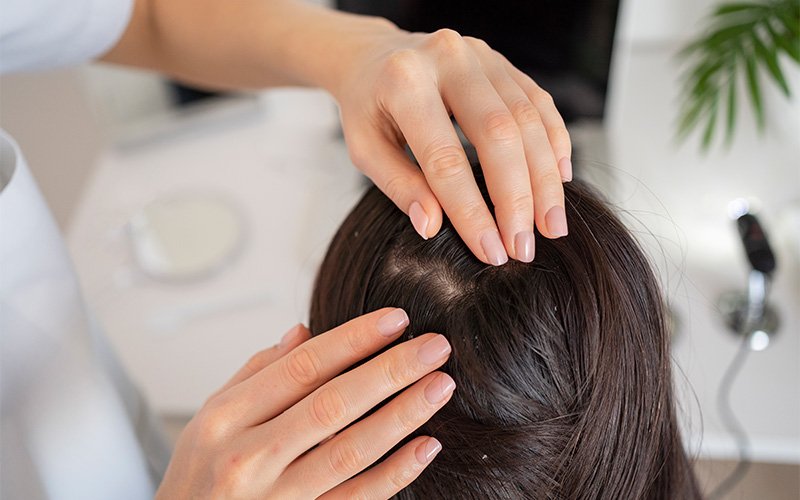
If your oily scalp persists regardless of your hair care routine, it may be worth considering a professional scalp treatment. Sometimes, oiliness isn’t just about how often you wash your hair. A greasy scalp may be caused by:
- Excess sebum production
- Sweat and humidity
- Product residue or buildup
- Overwashing or harsh cleansing
- Hormonal changes or stress
At Bio Organicare, we will conduct a comprehensive scalp analysis to better understand the cause of your greasy scalp before recommending a suitable approach. This may involve:
- A digital scalp scan: A high-resolution camera is used to examine your scalp up close, allowing us to check for visible oiliness, buildup, flakes or congestion.
- Condition assessment: Our specialist identifies your scalp type and condition, such as oily, dry, sensitive, inflamed or congested.
- Follicle evaluation: We assess hair density and follicle responsiveness to better understand how your scalp environment may be affecting your hair.
From there, targeted treatments can be recommended based on what your scalp needs. Our Scalp Maintenance & Repair treatments for an oily scalp can help to thoroughly remove excess oil, sweat and residue while calming the scalp and reducing congestion.
Conclusion
Building a hair care routine for an oily scalp does not have to mean washing constantly or using the strongest products you can find. Focus on keeping buildup under control, properly cleansing the roots, and using products that do not weigh your scalp down. It’s best to keep to a consistent, scalp-balancing routine and incorporate professional scalp treatments when needed.
If oiliness keeps returning despite your efforts, book an appointment with Bio Organicare today. Our specialists can assess your scalp condition and recommend a care plan tailored to your needs.
Frequently Asked Questions
Q1: Does diet affect an oily scalp?
Diet may influence how oily your scalp feels for some people, although it is rarely the only cause. Very oily foods, high-sugar diets and dehydration may affect overall skin balance. Try to keep your meals balanced with enough protein, vegetables, whole grains and water. If your scalp suddenly becomes much oilier, it may also be worth considering stress, sleep, and hormonal changes.
Q2: Can I use hair oil if I already have an oily scalp?
You can, but it depends on the product and how you apply it. Heavy oils placed directly on the scalp may make oily roots feel greasier or more congested. If your hair ends are dry, apply a small amount of lightweight oil only to the mid-lengths and ends. Avoid using oil as a scalp treatment unless it is recommended for your scalp condition.
Q3: Does tying my hair up make an oily scalp worse?
Tying your hair up does not directly cause an oily scalp, but it can trap sweat and heat around the roots, especially in Singapore’s humidity. Tight hairstyles may also create tension on the scalp. If you tie your hair often, avoid very tight styles, wash after heavy sweating and let your scalp breathe when possible.