
- Your cart is empty Browse Shop
Key Takeaways
- An oily scalp does not directly cause hair loss, but excess sebum can contribute to buildup, irritation, and discomfort that may affect the overall scalp environment.
- When oiliness and hair shedding happen together, we look at whether the scalp has recently become oilier, whether shedding increased at the same time, and whether there are other symptoms such as itching, flaking, or sensitivity.
- Changes such as a widening parting, thinning at the crown, or a receding hairline may point to pattern hair loss rather than oiliness alone.
- Managing an oily scalp usually starts with consistent cleansing, reducing product buildup at the roots, and avoiding overly harsh products that leave the scalp feeling stripped.
- A scalp treatment can help address recurring oiliness, buildup, and scalp discomfort by focusing on the overall scalp condition rather than simply removing excess oil.
Introduction
If your scalp becomes greasy quickly and you are also noticing more hair fall, it is natural to wonder whether the two are connected.
In our experience, however, an oily scalp does not directly cause hair loss. Sebum is your scalp’s natural oil, and it plays an important role in protecting the skin and maintaining moisture.
We may become more concerned when excess sebum on the scalp occurs alongside other changes. Oil can mix with sweat, dead skin cells, styling products, and residue, leaving the scalp feeling coated or uncomfortable. Oiliness and hair shedding may also happen at the same time because of shared triggers such as stress, hormonal changes, or changes in your routine.
That is why it is crucial to also consider buildup, scalp discomfort, washing habits, stress, and hormonal changes. This gives us a much clearer picture than simply treating oil as the problem.
What We Check When You Have an Oily Scalp and Hair Loss
While an oily scalp does not directly cause hair loss, it can contribute to other scalp issues, such as buildup, irritation, or persistent discomfort. When oiliness and increased shedding appear at the same time, we look at both concerns separately before deciding whether they may be related.
1. Has Your Scalp Become Oilier Than Usual?
A naturally oily scalp is not automatically a concern. What interests us more is a sudden or noticeable change. For example, if your roots have always become greasy by the end of the day but your scalp feels comfortable, and your hair density is stable, oiliness may simply be part of your normal scalp pattern.
However, if your scalp suddenly starts becoming greasy much faster than usual, we would look at what may be driving that change.
2. Did Your Hair Shedding Increase at the Same Time?
If your scalp started getting oilier around the same time that you noticed more shedding, we would look at what else was happening then. Stress, poor sleep, hormonal changes, illness, lifestyle changes, or a new hair product can sometimes affect both your scalp and hair.
3. Are There Any Other Symptoms?
We will also look for signs such as:
- Itching
- Redness or sensitivity
- Recurring flakes
- Tenderness
- A “heavy” or coated feeling
- Visible buildup around the roots
These symptoms tell us more about the relationship between your scalp health and your hair growth.
For instance, one client may have oily roots but no discomfort or hair loss. Another may have similar oiliness together with persistent itching, flakes, and increased shedding. Although both individuals have an oily scalp, we would not recommend the same approach for both.
4. How Has Your Hair Density Changed?
We also look at where the thinning is happening and how it has progressed over time. A widening parting, thinning at the crown, a receding hairline, or a gradual loss of density in the same areas may point to pattern hair loss rather than oiliness.
What We Recommend If Excess Oil Is Affecting the Scalp and Hair Growth
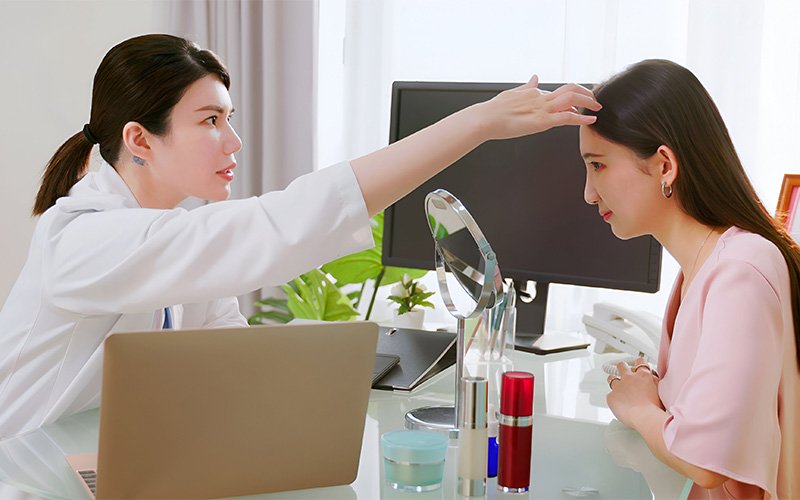
If excess oil contributes to buildup, irritation, or ongoing scalp discomfort, washing more aggressively is unlikely to solve the whole problem. We focus on keeping the scalp clean and balanced while also checking whether shedding, sensitivity, or changes in density need separate attention.
1. Adjust Your Cleansing Routine
If sweat, sebum, and residue are building up quickly, washing more regularly may help keep the scalp comfortable. The goal is not to make it feel squeaky clean, but to remove buildup without leaving the scalp tight, dry, or stripped.
You can also consider a gentler option such as Bio Organicare’s Hair Bath, a natural scalp-cleansing shampoo. It is formulated to cleanse the scalp without relying on harsher ingredients, helping to remove excess oil and residue while keeping your routine gentle and consistent.
2. Reduce Product Buildup at the Roots
Heavy conditioners, hair oils, styling creams, and frequent dry shampoo use can make an oily scalp feel even more congested. Try keeping richer products away from the roots and use scalp products only where they are actually needed.
3. Keep Your Routine Consistent
When oiliness becomes frustrating, it is tempting to keep switching shampoos or adding new scalp products. However, changing too many things at once makes it harder to tell what is helping. A simpler, more consistent routine gives you a clearer sense of how your scalp is responding.
4. Consider Professional Scalp Care
If your scalp still becomes oily very quickly despite these changes, that is usually when we would recommend taking a more targeted approach.
At Bio Organicare, we start with a Scalp Analysis & Consultation to assess factors such as oil balance, buildup, sensitivity, follicle condition, and visible changes in density. From there, we can recommend a customised oily scalp treatment based on what your scalp actually needs, rather than simply using stronger cleansing products. This includes removing trapped residue and buildup while supporting scalp comfort and balance, helping to maintain a healthier scalp environment for hair follicles and growth.
Conclusion
So, will an oily scalp cause hair loss? The answer is no, not directly. Excess oil on its own does not automatically damage the hair follicles or make your hair fall out.
What matters more is what is happening alongside the oiliness. If you are also dealing with buildup, irritation, persistent discomfort, increased shedding, or visible thinning, it is worth looking more closely at your overall scalp condition rather than treating oil as the sole problem.
At Bio Organicare, we take a scalp-first approach to care, with particular experience in sensitive and reactive Asian scalps. We begin with professional scalp analysis to understand your scalp condition, then combine bio-organic formulations with technology-supported scalp activation to support long-term scalp stability and hair growth.
If recurring oiliness, discomfort, or increased shedding is becoming difficult to manage, contact us to arrange a consultation today.
Frequently Asked Questions
1. Can oily hair make my hair look thinner even if I am not losing more hair?
Yes. Excess oil can cause strands to clump together and lie flatter at the roots, making the scalp look more visible. This can make your hair appear thinner even when your actual hair density has not changed.
2. How often should I wash my hair if I have an oily scalp?
Wash often enough to keep your scalp comfortable and free from excess sweat, oil, and residue. In Singapore’s humid climate, some people with oily scalps may prefer to wash daily. The key is to use a gentle cleanser and avoid repeatedly stripping the scalp with harsh shampoos.
3. Should I use dry shampoo if my scalp gets oily quickly?
Dry shampoo can help absorb excess oil between washes, but it should not replace regular cleansing. Using it too often can add to product buildup around the roots, especially if your scalp is already prone to oiliness or congestion.